Mary Shelley
(1797 - 1851)
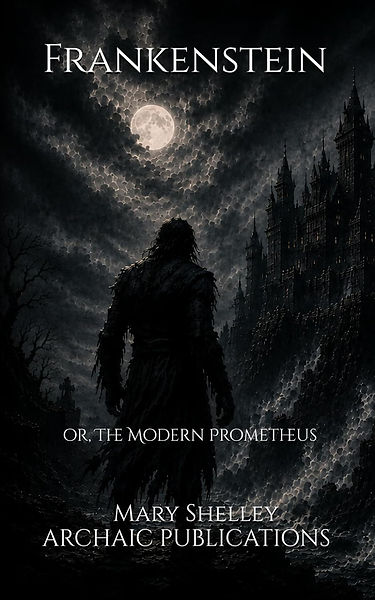
Mary Shelley was an English novelist, essayist, biographer, and travel writer whose work left a lasting mark on world literature. She is best known as the author of Frankenstein, a novel widely regarded as one of the earliest and most influential works of science fiction. Through her writing, Shelley explored themes of creation, ambition, responsibility, isolation, and the limits of human knowledge—subjects that continue to resonate with readers more than two centuries later.
Mary Wollstonecraft Godwin was born on August 30, 1797, in London. She was the daughter of two prominent intellectuals of her era: philosopher William Godwin and pioneering feminist writer Mary Wollstonecraft. Tragically, her mother died shortly after giving birth, and Shelley grew up under the care of her father, whose extensive library and intellectual circle provided her with an exceptional education. From an early age, she was exposed to literature, philosophy, politics, and the emerging scientific ideas of the late eighteenth and early nineteenth centuries.
In 1814, at the age of sixteen, she began a relationship with the Romantic poet Percy Bysshe Shelley. The pair traveled extensively throughout Europe and eventually married in 1816. Their years together were marked by both creativity and hardship, including financial difficulties and the loss of several children. Despite these challenges, Mary continued to write and develop her literary voice.
The idea for Frankenstein emerged during the famous summer of 1816, often called the “Year Without a Summer,” when Mary and Percy Shelley stayed near Lake Geneva with poet Lord Byron and others. After a challenge to write ghost stories, Mary conceived the tale of Victor Frankenstein and the creature he brings to life. The novel was first published anonymously in 1818 and later became recognized as one of the defining works of modern literature.
Although Frankenstein remains her most celebrated work, Shelley wrote several other novels, including Valperga, The Last Man, Perkin Warbeck, and Lodore. She also produced biographies, essays, short stories, and travel writings. Her novel The Last Man, depicting a future world devastated by a global pandemic, has gained renewed recognition for its remarkably forward-looking themes.
Shelley’s writing often challenged traditional ideas about science, morality, religion, and humanity. Through Frankenstein, she explored the consequences of unchecked ambition and questioned the ethical responsibilities that accompany scientific discovery. These themes were considered provocative by many readers of her time and have contributed to the novel’s enduring relevance in discussions of technology, ethics, and the human condition.
After Percy Shelley’s death in 1822, Mary devoted much of her life to supporting their son and preserving her husband’s literary legacy. She edited and promoted his poetry while continuing her own writing career. Through determination and literary skill, she established herself as a respected author during a period when women writers often faced significant obstacles.
Mary Shelley died on February 1, 1851, at the age of fifty-three. Today, she is remembered not only as the creator of Frankenstein but also as a pioneering literary figure whose imagination helped shape modern science fiction and horror. Her works continue to inspire readers, scholars, filmmakers, and writers around the world, securing her place as one of the most influential authors of the nineteenth century.